
32: Scaling
The dilution of the consolidation myth

Vida e caffè was a real breath of fresh air when it burst onto the South African scene in the early 2000’s. The Kloof street store was a regular spot of sanity for me on my many trips to Cape Town.
My friend Roelie had the impression that “they only have a fixed number of coffee beans and every time they open a new store, the coffee gets weaker as they have to stretch the coffee to cover all the stores.”
I think he was on to something…
In marketing they have a concept called the “just-noticeable difference” (JND) – the threshold where change is noticed.
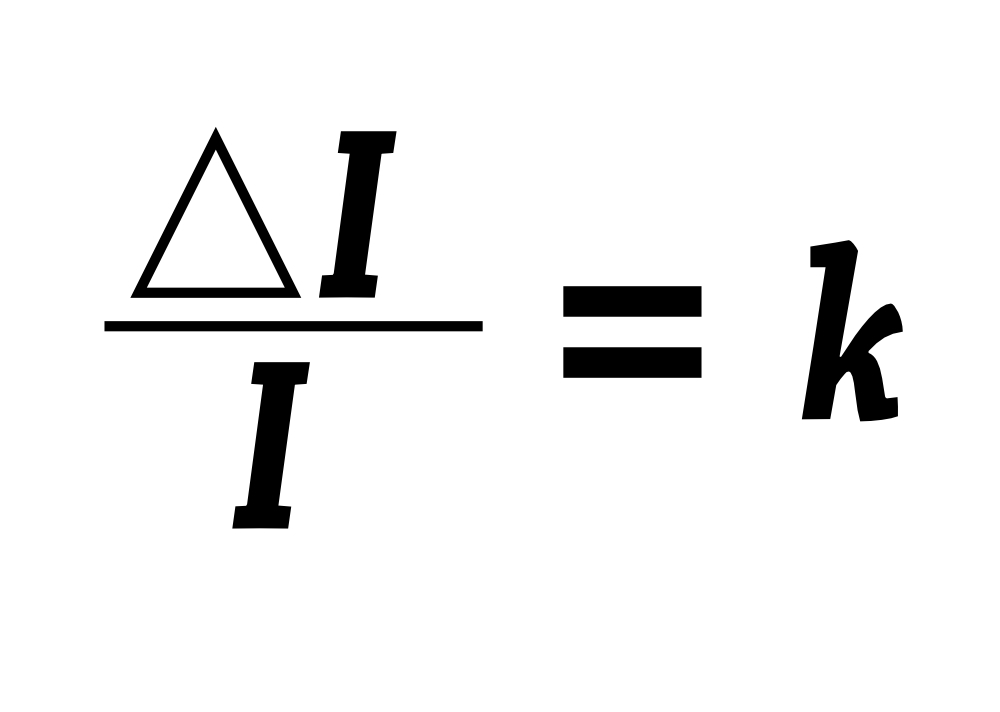
This concept is explained via a standard case study where famously Cadbury’s kept shaving microns off the cardboard strength of their gift boxes. Every single change was below the JND. Consumers could not tell the difference and the company saved real cash as the packaging became cheaper.
The cumulative effect though was that their gift boxes started feeling cheap and falling apart. People simply did not feel comfortable giving a gift that felt this cheap.
The soup of change
The JND has been the friend of ‘value engineers’ for the past 50 years, and the enemy of just about everybody else. We all know the feeling where you buy a new product, love the taste and flavour and a year later notice something isn’t quite the same.
The JND is also used more colourfully to discuss our change blindness in the story of the boiled frog. Apparently (have never seen an actual test of this) a frog will jump out of hot water immediately, sensing the danger.
When you raise the temperature gradually it will stew in its soup and become too lethargic to escape the immediate danger.
Currently we are very much the frog in the soup.
A famous 2004 study indicated how the ‘nutritional density’ of our food had been declining in the 50 year period they looked at. At the time the assumption was that the main driver was the selection of specific species suitable for mass agriculture. Farmers were selecting species that grew faster and yielded more volume/weight but had less nutritional value.
This makes sense from a farmer’s point of view where they are paid by weight or volume (and more recently the aesthetics). Nutritional density and value are far harder to measure than how many tonnes of oranges you have delivered.
That’s not the whole story.
The mathematician Irakli Loladze has been on a thirty-year mission to understand how organisms adopt to higher CO2 concentrations. Time and time again he has discovered that plants increase the production of sugars to the detriment of other nutritional elements such as proteins and vitamins.
A lot of nutritional scientists have spoken favourably about how plants grow faster due to higher CO2 concentrations and how we can expect to have more nutritional bounty. What they have not measured is how the nutritional value of the increased volume has dropped.
To the consumer, the experience has not triggered the JND. On the contrary, people delight at being able to buy more for less money.
How we think about scale
Since the industrial era we’ve mostly thought of consolidation as the key to scale. You bundle all the activities in one giant mega plant and ‘hey presto,’ you can deliver many millions of widgets more than you could from thousands of little, independently operating factories.
By consolidating you increase repeatability and predictability of output. Every unit that comes from the production line is exactly like the one before. Modern robotics has added some customisation like colours and features but in essence the giant machine is set up to deliver one thing, very efficiently.
The unintended consequences of scale
Very rarely do the designers and engineers who design such ‘systems at scale’ actually consider scale as a key negative factor in the consequences of what they are creating.
When you produce something at scale there are invariably unintended and hidden costs. Just like the diluted coffee, the need for system conformity can pervert the thing that is being produced.
For instance:
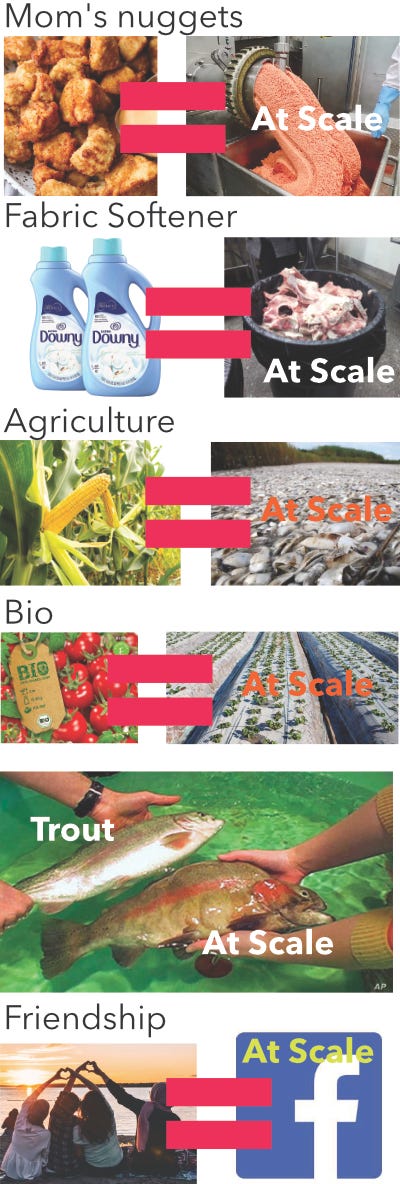
The chicken used in nuggets need to be processed in a very different way in order for the process to work.
When you manufacture fabric softener at scale, the only place you can find the fats needed are at the meat factory. The waste products not suitable for consumption are melted and extracted to form tallow. As P&G politely put it: “If we didn’t use it, it would become landfill.”
Concentrated masses of farmlands, such as the ones in the American mid-west and Latin America create tsunamis of pesticide and fertiliser run-off into the lakes and oceans around them. Creating oxygen dead zones and massive fish die-offs.
In order to avoid pesticides bio-farmers use tonnes of plastic sheeting. Thereby contributing to the close to one trillion tonnes (998 million) of annual agricultural plastic waste.
Fish farm concentration create a whole litany of issues but in order to get the animals to grow faster we get Frankenfish.
And finally, the recent documentary “The social dilemma” has done an excellent job at showing what happens to our mental health, happiness and communities when we try and run friendship at scale.
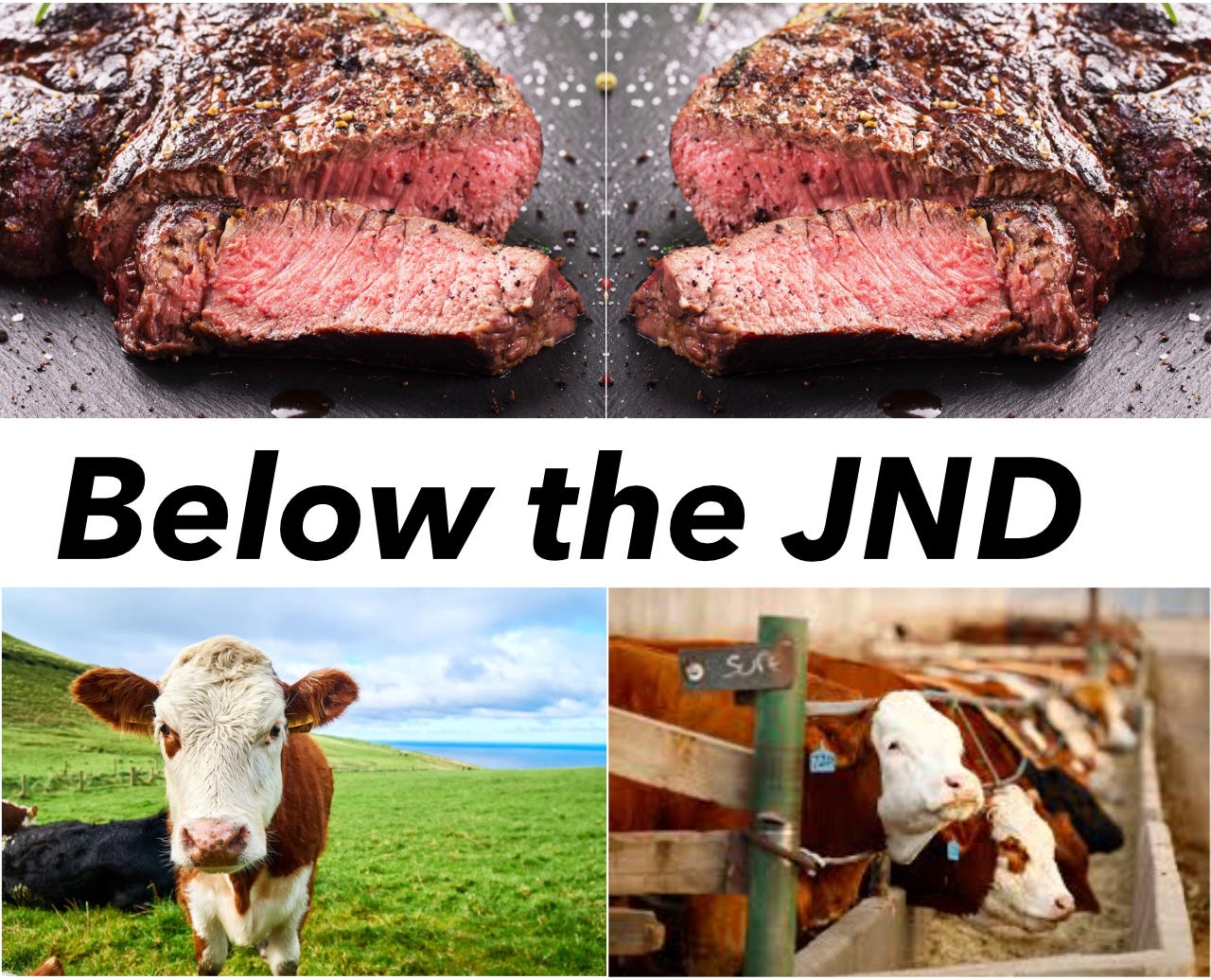
In all of these cases, the specific product is not problematic. The challenges arise from the scaling model. The changes, additives and substitutions made to make the scaling process work, are not experienced or noticed by the consumer:
The question of scale
By one measure sharks (450 million years) and crocodiles (240 million years) are the most successful animals in the world. They were around long before the dinosaurs and survived a few mass extinctions. They may not survive humans but we can learn about survival from such masters.
Sharks do not owe their success to scale.
If they simply grew bigger and bigger as they ate more and more, their internal systems would collapse. They have a natural mechanism to stop the growth and balance their systems at the right size.
Scale up vs. scale out
In the regenerative community there has been a lot of talk about the scaling challenge. How to you beat the beast without becoming the beast?
One option that gets mentioned is ‘scaling out’ or horizontal scaling. The idea is to replicate sustainable ‘units’ or ‘pods.’ In a way this is the innovation model that Gore is famous for. They never let their organisational pods get larger than the task requires.
Right sizing for quality and then replicating for quantity.
In essence, creating more sharks, not bigger sharks!
Life is like a box of chocolates…
In how many domains have we crossed the Cadbury’s threshold, where we feel the box crumbling around us? Where we feel that the integrity of our food, products and friendships have been compromised due to the production at scale.
David Ogilvy famously said: “The pursuit of excellence is less profitable than the pursuit of bigness, but it can be more satisfying.”
As the world becomes more unpredictable, challenging and smarter, no one can afford the single-minded pursuit of bigness. Perhaps we can focus our attention on right-sized excellence again, and in the process, stop jumping sharks and start beating them.
Let’s take that leap
Three key take outs:
Beware the scale
Are you consciously analysing how your scaling strategy is affecting the outcome? What are the hidden and cumulative costs?Slippery slopes
Where are you playing with the JND? How far have you migrated from your original intent? This is a obvious trap for people living in ‘constant beta.’Small is beautiful
We live in a much smarter business environment now. The big is beautiful era should be over, yet we are consolidating data, production and control. Find ways to liberate the inherent intelligence of the system by playing with small units.